Astrophysics · Scientific machine learning
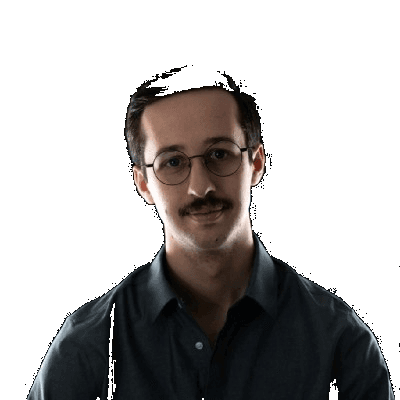
Maxime Ronceray
I build machine-learning tools to find unusual galaxies and infer their physical properties from large astronomical surveys.
01
Research & experience
Work at the intersection of astronomical surveys, probabilistic inference, representation learning and scientific software.
Mar - Sep 2026Research intern - galaxy population inferenceCEA Paris-Saclay · CosmoStat
Variational inference for data-driven galaxy population priors with differentiable stellar-population synthesis.
- Develop amortized posteriors for 15 physical galaxy parameters.
- Combine DSPS, normalizing flows and reweighted wake-sleep training.
- Study scalable population-level inference for next-generation imaging surveys.
2025 - 2026Master research project - foundation modelsIAC Deep · University of Tours · Tenerife / Blois
Benchmarking foundation models for unsupervised discovery in matched Euclid imaging and DESI spectroscopy.
- Compare AstroPT, AstroCLIP and AION multimodal representations.
- Build scalable anomaly scores with normalizing flows and cross-modal alignment.
- Paper accepted at the ICLR 2026 FM4Science workshop.
2025 · 3 monthsAI assessment for the DOC-Rivers projectOSUC - Observatory of Universe Sciences
Remote sensing of dissolved organic carbon in Arctic rivers with scalable machine-learning workflows.
- Evaluated mixture-of-experts approaches for remote-sensing data.
- Parallelized computation on HPC resources and transferred the workflow to domain scientists.
2024 · 4 monthsScientific software engineering internLPP · CNRS / Ecole Polytechnique · Palaiseau
Developed PLASMAG, a simulation environment for search-coil magnetic sensors used in space instrumentation.
- Designed a dependency-driven simulation engine and scientific interface.
- Integrated SPICE simulations and sensor-parameter optimization.
- Benchmarked the calculation engine and presented the project to researchers.
2023 · 3 monthsInstrumentation software internLPC2E · CNRS / ESA / NASA HelioSwarm · Orleans
Built an interface to automate space-instrument testing and measurement acquisition.
- Controlled oscilloscope hardware through an SDK.
- Automated measurements, signal processing and analysis.
02
Education
2024 - 2026MSc Data Science and Artificial IntelligenceUniversity of Tours · Blois
Machine learning, deep learning, statistics, probability, data engineering and advanced data structures.
- Research track focused on scientific machine learning and astronomical applications.
- Student representative for the University of Tours.
2022 - 2024BSc-level degree in software engineering (BUT)University of Orleans · Institute of Technology
Software development, project management and an artificial-intelligence specialization.
- Elected student representative to the institute board of directors.
2020 - 2022Computer science and physics studiesPolytechnique Montreal · Montreal
Software engineering, physics, linear algebra, calculus and scientific simulation.
- Developed Python and MATLAB simulations and a team Qt application.
03
Skills
Scientific ML
- JAX
- PyTorch
- Normalizing flows
- Multimodal transformers
- VQ-VAE
Research computing
- Python
- NumPy
- Pandas
- HPC
- Scientific visualization
- LaTeX
Engineering
- C / C++
- React
- SQL
- Git
- Data engineering
- Scientific software
Languages
- French - native
- English - fluent
04
Selected work
05